

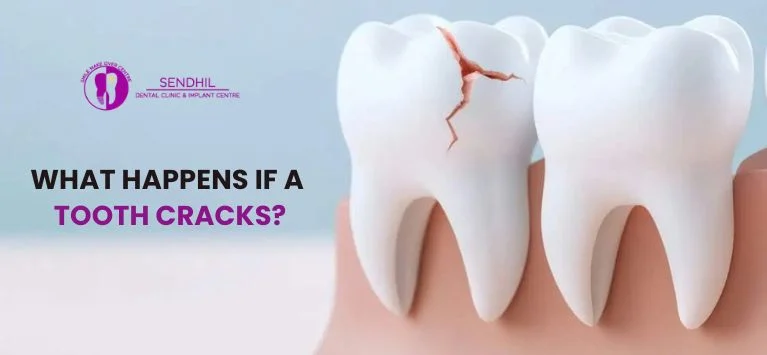
What Happens If a Tooth Cracks? Symptoms, Treatment and When to See a Dentist

Dr. D.Sendhil Nathan
MDS, DNB (Prosthodontics And Implantology)
A cracked tooth may seem like a small dental problem, especially if the crack is difficult to see or causes only occasional discomfort. However, a crack can gradually extend deeper into the tooth and allow bacteria to reach areas that should remain protected. This can eventually result in infection, severe pain, or even tooth loss.
Not every tooth crack requires the same treatment. The right approach depends on where the crack is located, how deep it is, and whether the inner part of the tooth has been affected.
Table of Contents
What Is a Cracked Tooth?
A cracked tooth is a tooth that has developed a fracture or break in its structure. The crack may be limited to the outer enamel or may extend deeper toward the pulp, which contains the nerves and blood vessels.
Some cracks are barely noticeable and may not cause any symptoms. Others can cause sharp pain while chewing or sensitivity to hot and cold foods. Because some cracks are difficult to see, a dental examination is often needed to determine how serious the damage is.
Common types of tooth cracks include:
- Craze lines: Tiny cracks limited to the enamel that usually do not cause pain.
- Fractured cusp: A piece of the chewing surface breaks, often around an existing filling.
- Cracked tooth: A crack extends from the chewing surface toward the gum line and may continue deeper.
- Split tooth: The tooth has separated into two or more sections.
- Vertical root fracture: A crack begins around the root and moves upward, sometimes remaining unnoticed until infection develops.
What Causes a Tooth to Crack?
Several factors can place excessive stress on a tooth and increase the risk of cracking. Common causes include:
- Biting hard foods such as ice, hard candy, or unpopped popcorn kernels
- Teeth grinding or clenching, particularly during sleep
- A blow or injury to the mouth
- Large fillings that have weakened the remaining tooth structure
- Normal wear and changes in teeth over time
- Sudden temperature changes that put stress on the tooth
A tooth that has already undergone extensive dental treatment may also have a greater risk of developing a fracture because some of its original structure has been removed.
Cracked Tooth Symptoms to Watch For
A cracked tooth does not always produce obvious symptoms. In some cases, the crack is discovered during a routine dental examination. When symptoms occur, they can vary depending on the location and depth of the fracture.
Common cracked tooth symptoms include:
1. Pain When Biting or Chewing
One of the most noticeable signs is sharp or sudden pain when you bite down. Some people experience discomfort when releasing the bite rather than when putting pressure on the tooth.
2. Sensitivity to Hot or Cold
A previously normal tooth may suddenly become sensitive to hot drinks, cold foods, or temperature changes. Sweet foods may also trigger discomfort.
3. Pain That Comes and Goes
Cracked tooth pain is not always constant. It may appear during chewing and disappear afterward, making it difficult to identify which tooth is responsible.
4. Gum Swelling or Tenderness
Inflammation around one particular tooth can occur when a crack irritates the surrounding tissues or allows bacteria to enter deeper parts of the tooth.
5. Signs of Infection
If bacteria reach the inner tooth and an infection develops, symptoms may include persistent tooth pain, swelling, bad breath, fever, or a pimple-like bump on the gum.
How Is a Cracked Tooth Diagnosed?
Finding a tooth crack is not always straightforward because some fractures are too small to see with the naked eye. Your dentist may ask about when the pain occurs and whether you have experienced an injury, teeth grinding, or sensitivity.
During the examination, the dentist may:
- Check the tooth for visible damage
- Ask you to bite down to identify the source of pain
- Examine the surrounding gums
- Use special lighting to make cracks easier to detect
- Apply a dental dye when necessary
- Take dental X-rays to look for related problems
- Recommend additional imaging, such as a 3D scan, when appropriate
Cracked Tooth Treatment Options
There is no single treatment for every cracked tooth. Your dentist will select an option based on the severity and location of the damage.
Dental bonding: Minor cracks or small areas of damage may sometimes be repaired using tooth-coloured resin.
Dental crown: A crown covers and protects the damaged tooth, helping hold the remaining structure together. This may be recommended when the tooth has enough healthy structure to be restored.
Root canal treatment: If the crack has reached the pulp and the nerve becomes infected or damaged, root canal treatment may be necessary. A crown may then be placed to protect the tooth.
Tooth extraction: If the tooth is severely split or the fracture extends into areas that cannot be successfully restored, extraction may be the only option. The missing tooth can later be replaced with an appropriate restoration, such as an implant or bridge.
Some very small enamel cracks may not require active treatment if they cause no symptoms or underlying problems. However, they should still be evaluated by a dentist.
What Happens If a Cracked Tooth Is Left Untreated?
A cracked tooth generally does not heal on its own. Even if the pain disappears, the fracture may still be present and can potentially become larger.
As the crack progresses, bacteria may enter deeper layers of the tooth and cause decay or infection. In severe cases, infection can develop around the tooth and make saving it more difficult.
This is why waiting for symptoms to become severe is not a good way to judge whether a cracked tooth needs attention.
When Should You See a Dentist?
You should arrange a dental examination if you notice pain while biting, unexplained tooth sensitivity, swelling around a tooth, or a visible crack or broken piece.
Seek prompt dental care if you experience severe or worsening pain, significant swelling, persistent sensitivity, a gum boil, fever, or signs of infection.
Until you can see your dentist, avoid chewing on the affected side and choose softer foods. A gentle warm salt-water rinse can help keep the area clean. Avoid trying to glue or repair the tooth yourself.
Can a Cracked Tooth Be Prevented?
While not every tooth crack can be prevented, several habits can reduce the risk. Avoid chewing ice and other extremely hard objects, do not use your teeth to open packages, and address teeth grinding or clenching with your dentist. If you participate in contact sports, wearing an appropriate mouthguard can also help protect your teeth.
Regular dental check-ups are important because some cracks cause little or no discomfort in their early stages.
Protect Your Tooth Before a Small Crack Becomes a Bigger Problem
A cracked tooth may begin with something as simple as occasional sensitivity or pain while chewing, but the damage can progress without appropriate care. Early examination gives your dentist a better opportunity to understand the crack and determine whether the tooth can be restored.
If you suspect that you have a cracked tooth, don’t wait for the pain to become severe. Schedule a dental evaluation to identify the problem early and protect your natural tooth whenever possible.