

Black Spots on Teeth: Causes, Treatment and When to See a Dentist

Dr. D.Sendhil Nathan
MDS, DNB (Prosthodontics And Implantology)
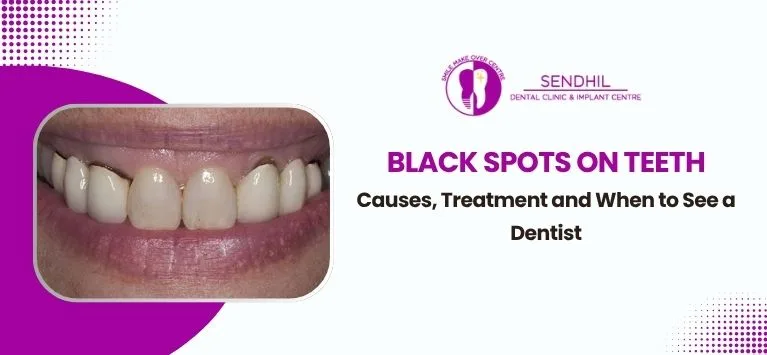
Noticing a black spot on your tooth can be worrying, especially when it seems to appear suddenly. You may immediately wonder whether it is a cavity or simply a stain. The truth is that black spots on teeth can have several causes, and not all of them mean tooth decay.
A dark mark may come from surface staining, tartar buildup, an old dental restoration, or changes within the tooth itself. However, since tooth decay can also appear as a dark spot, it is important not to ignore a new or changing mark.
Understanding the possible causes can help you know when a dental check-up is necessary.
Table of Contents
What Causes Black Spots on Teeth?
A black or dark spot can develop for different reasons. Some are mainly cosmetic, while others may require dental treatment.
Tooth Decay
One of the common concerns associated with a dark spot is a cavity. When bacteria in dental plaque produce acids, they can gradually weaken the enamel. As decay progresses into deeper tooth layers, the affected area may become brown or black.
Tartar Buildup
Plaque that remains on the teeth can harden into tartar, particularly around the gumline and between teeth. Tartar can collect pigments from food and drinks over time, making it appear yellow, brown or even black.
Unlike soft plaque, hardened tartar cannot be properly removed by ordinary brushing. Professional dental cleaning may be needed to remove it.
Food and Drink Stains
Regular consumption of strongly coloured foods and drinks can gradually stain the tooth surface. Coffee, tea, dark-coloured beverages and certain foods contain pigments that may leave noticeable discoloration.
These stains generally affect the outer surface of the tooth and may improve with professional cleaning or appropriate whitening treatment.
Tobacco Use
Smoking and other forms of tobacco use can contribute to stubborn tooth staining. The substances present in tobacco can leave dark deposits on the teeth and may also contribute to plaque and gum problems.
Old Fillings or Crowns
Sometimes, a dark line or spot may be related to previous dental work. Older metal fillings can create a dark appearance around a tooth, while staining or changes around the edges of a crown or filling can also make the area look darker.
A dentist can examine the restoration and determine whether the discoloration is simply cosmetic or related to an underlying problem.
Tooth Injury or Enamel Changes
An injury to a tooth can sometimes affect the tissues inside it and cause the tooth to become darker over time. Enamel defects or tiny cracks may also create areas where stains accumulate more easily.
How Can You Tell If It Is a Stain or a Cavity?
It is not always possible to identify the cause just by looking at the tooth.
A surface stain is often relatively smooth and may be associated with foods, drinks or tobacco. It may improve after professional cleaning.
A cavity may feel different. The area can become rough, soft or sticky, and it may gradually increase in size. Sensitivity to hot, cold or sweet foods and pain while chewing can also suggest that the tooth needs attention.
Still, these signs are not enough to make a diagnosis at home. A dentist may examine the tooth closely and, when necessary, use dental X-rays to check for decay that cannot be seen from the surface.
How Are Black Spots on Teeth Treated?
Treatment depends entirely on what is causing the discoloration.
If the mark is caused by tartar or surface staining, professional scaling and polishing may be enough to improve the appearance.
For certain types of stains, a dentist may recommend professional teeth whitening. Whitening is generally intended for suitable staining rather than tooth decay.
If the dark area is caused by a cavity, the decayed portion needs to be treated. A filling may be appropriate for a smaller cavity. If decay has reached the inner pulp of the tooth, root canal treatment may be required.
When an old restoration is responsible for the discoloration, replacing the filling or crown may be considered where appropriate. More noticeable or persistent cosmetic discoloration may sometimes require treatments such as bonding or veneers.
Can Black Spots on Teeth Be Prevented?
You cannot prevent every type of tooth discoloration, but good daily habits can reduce your risk.
- Brush twice a day with fluoride toothpaste.
- Clean between your teeth regularly with floss or another suitable interdental method.
- Limit frequent consumption of staining foods and drinks.
- Rinse your mouth with water after consuming strongly coloured beverages.
- Avoid smoking and tobacco products.
- Attend regular dental check-ups and professional cleanings.
- Do not try to scrape or remove a dark spot using sharp objects or abrasive substances.
When Should You See a Dentist?
A black spot does not automatically mean that your tooth is seriously damaged. However, a persistent or changing dark spot deserves professional attention.
Schedule a dental examination if the spot is becoming larger or darker, does not improve with normal cleaning, feels rough or sticky, or is accompanied by sensitivity, pain, bleeding gums or bad breath.
Even when there is no pain, an examination can help determine whether you are looking at a harmless stain, tartar, an old restoration or an early dental problem. Finding the cause early can make treatment simpler.
Final Thoughts
Black spots on teeth can have many causes, from everyday staining and tartar to cavities and changes within the tooth. Since appearance alone cannot always reveal the cause, it is better to have a persistent dark spot checked rather than trying to remove it yourself.
With the right diagnosis, treatment can be tailored to the actual problem—whether that means professional cleaning, whitening, a filling or another dental procedure.